
Grifting the right way

A few months back, I wrote about the Nelk Boys and the rise of right-wing grifter culture.

Since then, I’ve been thinking a lot about the rise of grifter culture in general, but especially on the left.
Right-wing grift is obvious, loud, sweaty. Supplements, flags, coins, rage bait in 20-minute chunks. You can smell the bad-faith moral rot through the screen.
But liberal grift looks a bit different.
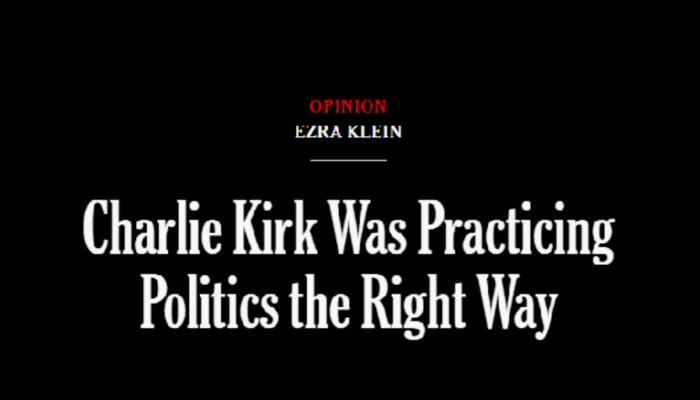
It looks like Ezra Klein’s opportunistic op-ed praising a well-documented bigot the day after he was assassinated.
Klein framed Kirk not as a demagogue bigot, but as an exemplar of “engagement,” praising his campus tours as proof that American politics could still be redeemed through debate.
It was a familiar move: elevate tone over substance, process over consequence. Klein seized the moment not to reckon with what Kirk actually said, but to extract a lesson palatable to the Beltway elite—one that reaffirmed their faith in civility while demanding nothing of them morally.
Why wrestle with the uncomfortable history of America repeatedly white-washing its most dangerous figures in the name of reunion and civility when it’s easier (and more lucrative) to lionize a bigot?
Thankfully, Ta-Nehisi Coates quickly called Klein out for his obvious grift by cataloging Kirk’s actual words: open calls for violence, explicit racism, antisemitism, eliminationist rhetoric toward trans people, Muslims, Haitians, Black Americans.
Kirk is redeemed not by his words, but by the coastal elite’s need for a comforting narrative in which extremism is merely a failure of dialogue rather than a coherent and well-documented ideology of hate.
Klein’s op-ed generated controversy, clicks, rebuttals, podcast segments—all while conveniently reinforcing his Abundance-bro brand as the sober mediator above the fray.
The op-ed is a case study on how to grift from the left: just convert a moment that demands moral clarity into a lesson about vibes. And make sure you do so in a way that is endlessly monetizable.
As Coates asks, chillingly: if you are willing to look away from the words of Charlie Kirk, from what else would you look away? Klein’s answer, intentional or not, is the answer that keeps on grifting: look away from the record, toward the discourse—and don’t forget to subscribe!
CPJ | 6 Feb. ‘26 | Memphis
I agree that extremism is a failure of dialogue, but everything you said here is true.