
Beale Street Blues
What the Grizzlies mean to Memphis and why they may not be here much longer.

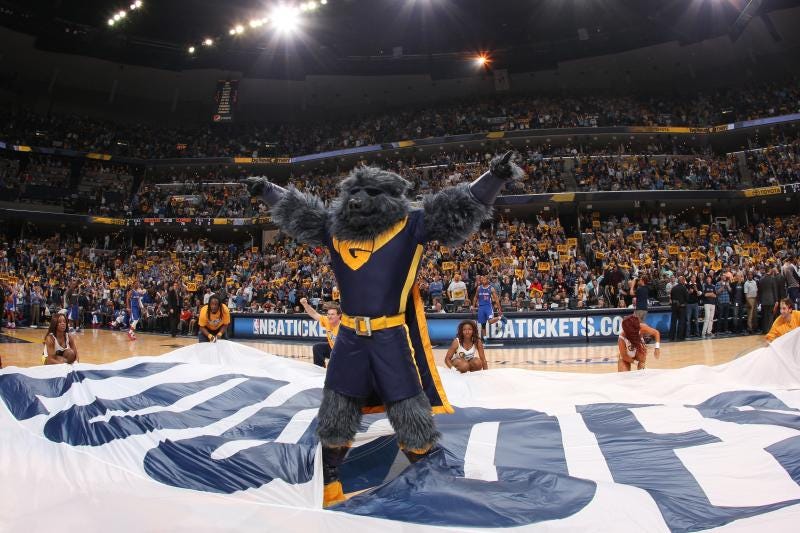
The NBA Playoffs are a sacred time in Memphis.
The humid air smells like barbecue and muddy river water. The Forum fills early. Kids in oversized Gasol jerseys race down the aisles. A grandmother in a Battier throwback leans forward in her seat. ZBO is courtside. So is TA and Glorilla.
The anthem ends. The lights dim. The crowd roars.
In that moment, the Grizzlies aren’t a tiny market subsidized by the coasts or a geopolitical scandal or a cautionary tale. They’re a ritual.
Memphis is a city that gathers. In churches and on porches and in protest marches. Around music and memory. The Grizz give it another reason.
They also give it language: Grit and Grind. We don’t bluff. Believe Memphis.
When the team struggles, the city debates like family. When it wins, strangers hug in the concourse. When it embarrasses itself, the disappointment feels personal.
Because it is.
The Grizzlies carry the city’s name across the country 82 nights a year. They are, for many Americans, the first association with a place that has long been misunderstood.
By the time the lights go out inside the Grindhouse, the city’s already made up its mind.
About who it is. Who it wants to be. Who people think it is.
Memphians don’t need the playoffs to know they’re resilient.
This is a place that’s buried kings. Where sharecroppers’ fears and despair birthed modern music. Where people continue to dance through hunger and heat and humiliation.
But on warm spring Delta nights, when the river wind cuts down Beale and 20K people become one multiracial organism, the Grizz transform into something else.
They transform into a mirror.
The Grizz weren’t born here.
They arrived in 2001, after six bleak seasons in Canada, a seemingly failed expansion experiment launched in 1995 alongside the Raptors.
They were a punchline.
When then-owner Michael Heisley announced he was moving the team to Memphis (thanks in large part to Fred Smith), the national reaction bordered on disbelief.
Memphis? Elvis and BBQ? Walking ducks?
But Memphis understood something that Vancouver didn’t: the orphan’s condition. The city has been asked repeatedly to prove it deserves what it has: a port, a music industry, a pro sports team.
So when the Grizzlies showed up with their losing seasons and lottery picks, Memphis didn’t recoil. It embraced.
Pau
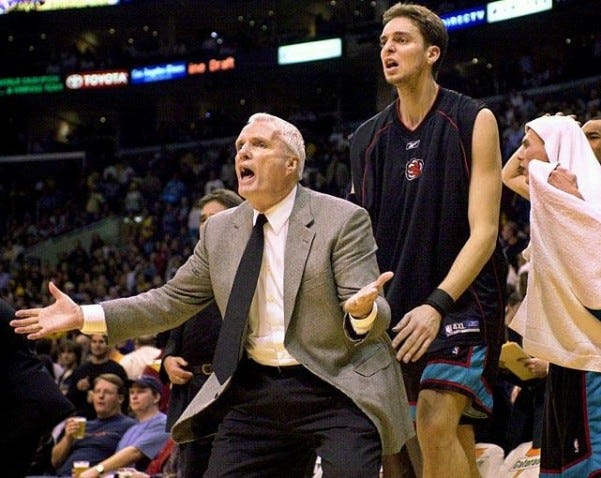
The first real NBA star Memphis ever claimed as its own (besides Penny) was a skinny Spaniard with long arms and a face that looked permanently perplexed.
Pau Gasol arrived in Memphis as 2001 Rookie of the Year. He moved with a kind of European elegance that felt, at first, out of place in a city that prized muscle over finesse. He shot turnarounds that kissed the rim. He passed like a big man at a ballet.
Pau walked so Jokic could run.
Under legendary coach Hubie Brown, those early 2000s teams made the playoffs three straight seasons. They were disciplined and deliberate. They defended. But they were swept out of the playoffs each time. Three years, three first-round exits. The ceiling seemed low, and Memphis, which had dared to dream, felt the familiar sting of almost.
Gasol was good—very good—but he was also a symbol of a franchise still learning how to be from nowhere. The team’s identity felt imported. The arena downtown was new and gleaming, but the city around it continued to drag under the weight of old injustices.
Then came 2008, and the trade.
Memphis sent Pau to the Lakers in a deal that, at the time, looked like surrender. Gasol would go on to win championships in Los Angeles. Memphis would receive cap space, Pau’s younger brother, draft picks, and the long view.
And if there’s one thing Memphis understands it’s the long view.
A theology of elbows
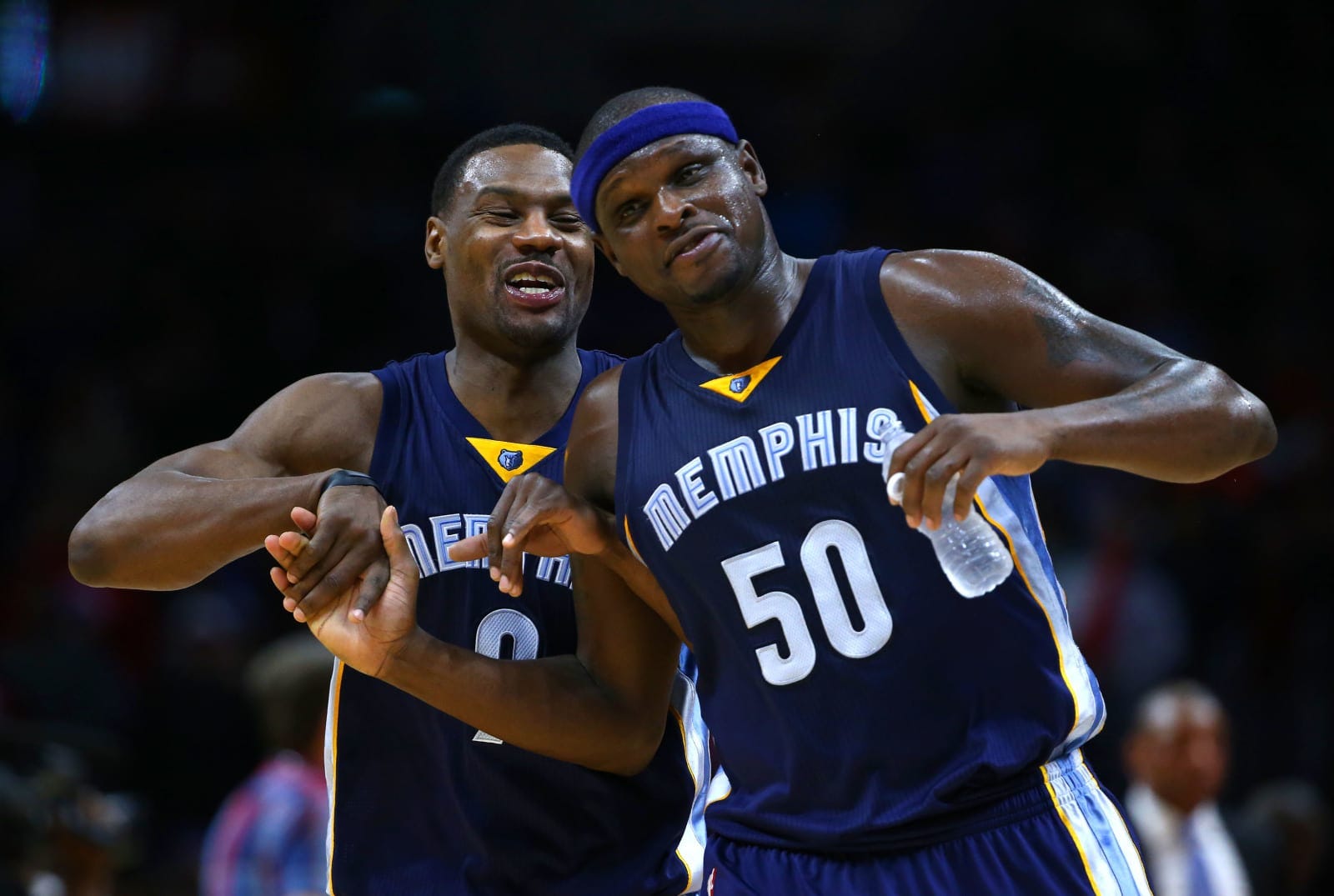
If the Pau years were about grace, the next chapter was about grit.
It began quietly.
A bruising forward from Michigan State named Zach Randolph arrived in 2009 with a FedEx plane full of off-court issues in tow. A relentless defender named Tony Allen came a few seasons later. A steady point guard named Mike Conley and a talented wing named Rudy Gay were drafted. And in the middle, anchoring everything, was Marc.
They called it Grit and Grind.
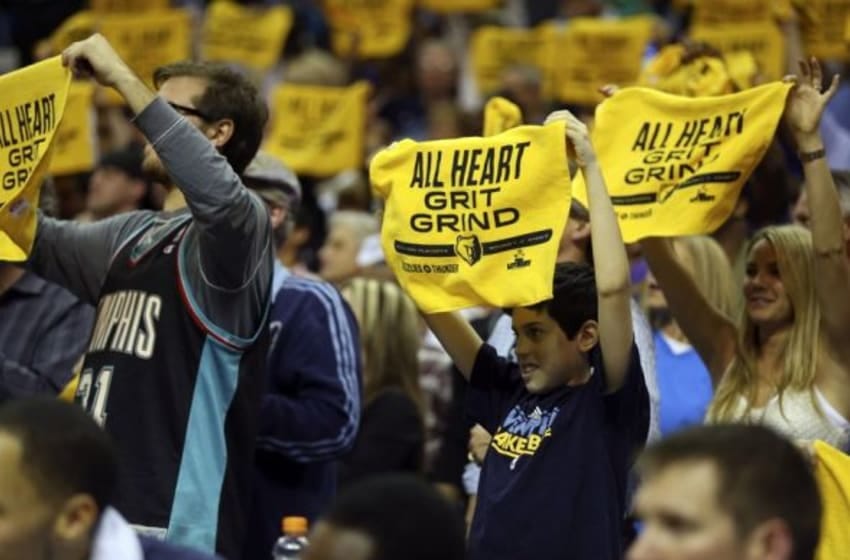
It was an autobiography, not a marketing campaign.
These Grizzlies didn’t run. They didn’t dazzle. They defended with suspicion and rebounded with vengeance. They treated every possession like it was existential.
In 2011, they upset the top-seeded Spurs in the playoffs and officially announced to the league that Memphis doesn’t bluff.
Grit and Grind came to define not just the team but the Delta—becoming ubiquitous through t-shirts, murals, and bumper stickers.


In 2013, the Grizz reached the Western Conference Finals. They lost to the Spurs in five, but for a few weeks in May, Memphis felt like the center of the basketball universe. The Grindhouse shook as thousands chanted whoop that trick.
It’s not hyperbole to say that Grit and Grind gave Memphis a new desperately needed civic mythology.
This was a city that had seen three decades of economic decline; factories closed, neighborhoods hollowed, schools starved. It had watched its brightest native and adopted sons—Elvis, Otis, Martin, Johnny—leave or be taken. A team that leaned into hardship, that refused to run from contact felt like redemption.
Grit and Grind wasn’t pretty or glamorous. It was, in its way, deeply Delta: stoic, stubborn, suspicious of flash.
And like many Delta stories, it ended not with triumph but with attrition. Knees gave out. Contracts expired. The league sped up. By the mid-to-late 2010s, the old core was gone. The league was a fundamentally different place. Bruising big men were now extinct.
Memphis had to decide who it was again.
Next gen
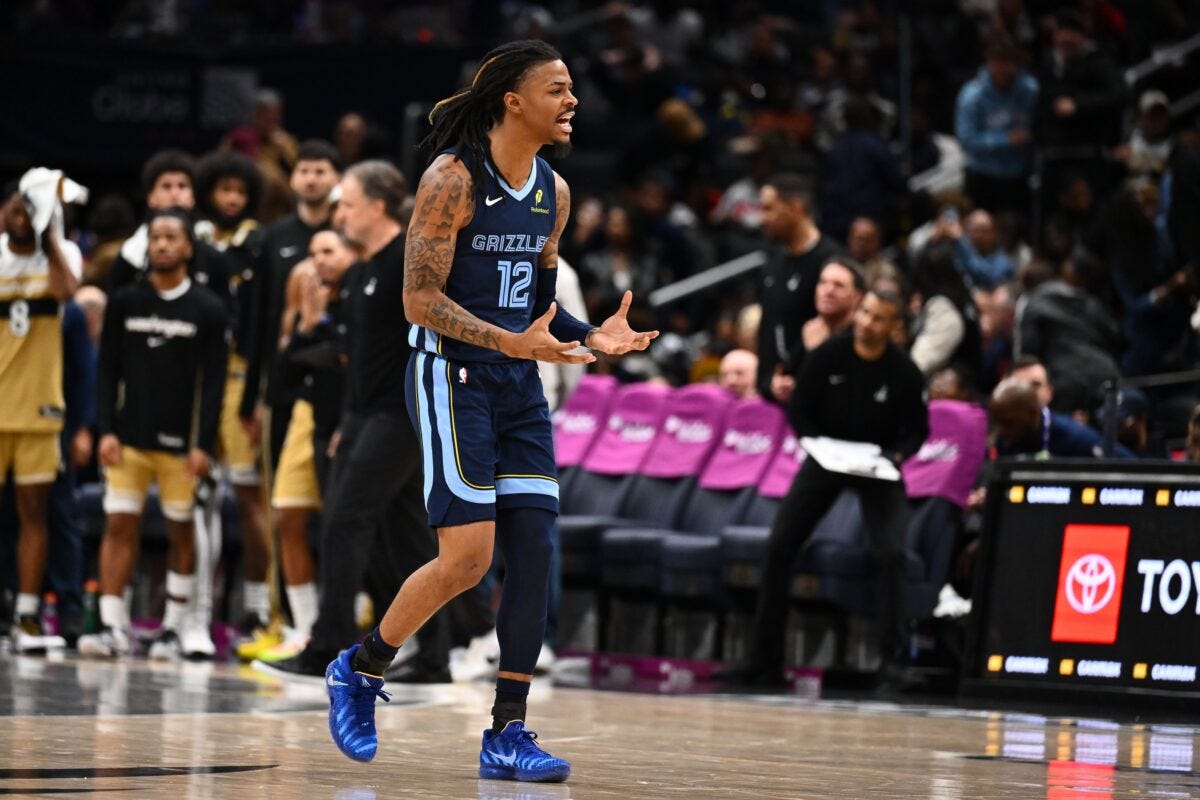
Enter Jaren Jackson Jr. and Ja Morant.
Ja arrived in 2019 after the Grizz secured the second pick. He was skinny, fearless, and seemingly immune to gravity. Every fast break was now a sermon about possibility.
The city that adopted Derrick Rose fell madly in love immediately.
Jaren and Ja weren’t Grit and Grind. They were something else: fast and improvisational; pure joy with a defiant edge. Like a steel guitar that refuses to stay in key.
Around them grew a new young and unafraid core: a lights-out shooter out of TCU named Desmond Bane; a second-rounder with a boulder-sized chip named Dillon Brooks; a 7-foot Kiwi named Steven Adams; a tenacious tweener out of Gonzaga named Brandon Clarke.
They slayed the dynastic Warriors in the 2021 play-in with a peacocking strut. All of the sudden, the Grizz were a national story.
A hopeful energy spread through Memphis like wildfire.
The next thing you know, First Take was taping live from Memphis; Nike was releasing Ja’s first signature shoe; and Zach Kleiman was named GM of the year.
They looked like the future.
But futures are fragile.
Call 12
Memphis seemed destined for a championship parade as the 2021–22 season tipped off.
They beat the Thunder by a record-breaking 73 points.
They played on Christmas for the first time.
They were the first team in NBA history to lead the league in rebounds/steals/blocks.
They set the franchise record for points-per-game, blocks-per-game, and rebounds-per-game.
And Despite having one of the youngest rosters, they were top-five in the NBA on offense and defense the entire season, eventually securing the second seed in the West after winning 56 games.
Ja wasn’t just an All-Star; he was must-watch TV, detonating the rim with a joyful violence that made defenders look like cartoon characters. The city felt it. The Grindhouse became different: louder, cockier, less satisfied just to be invited.
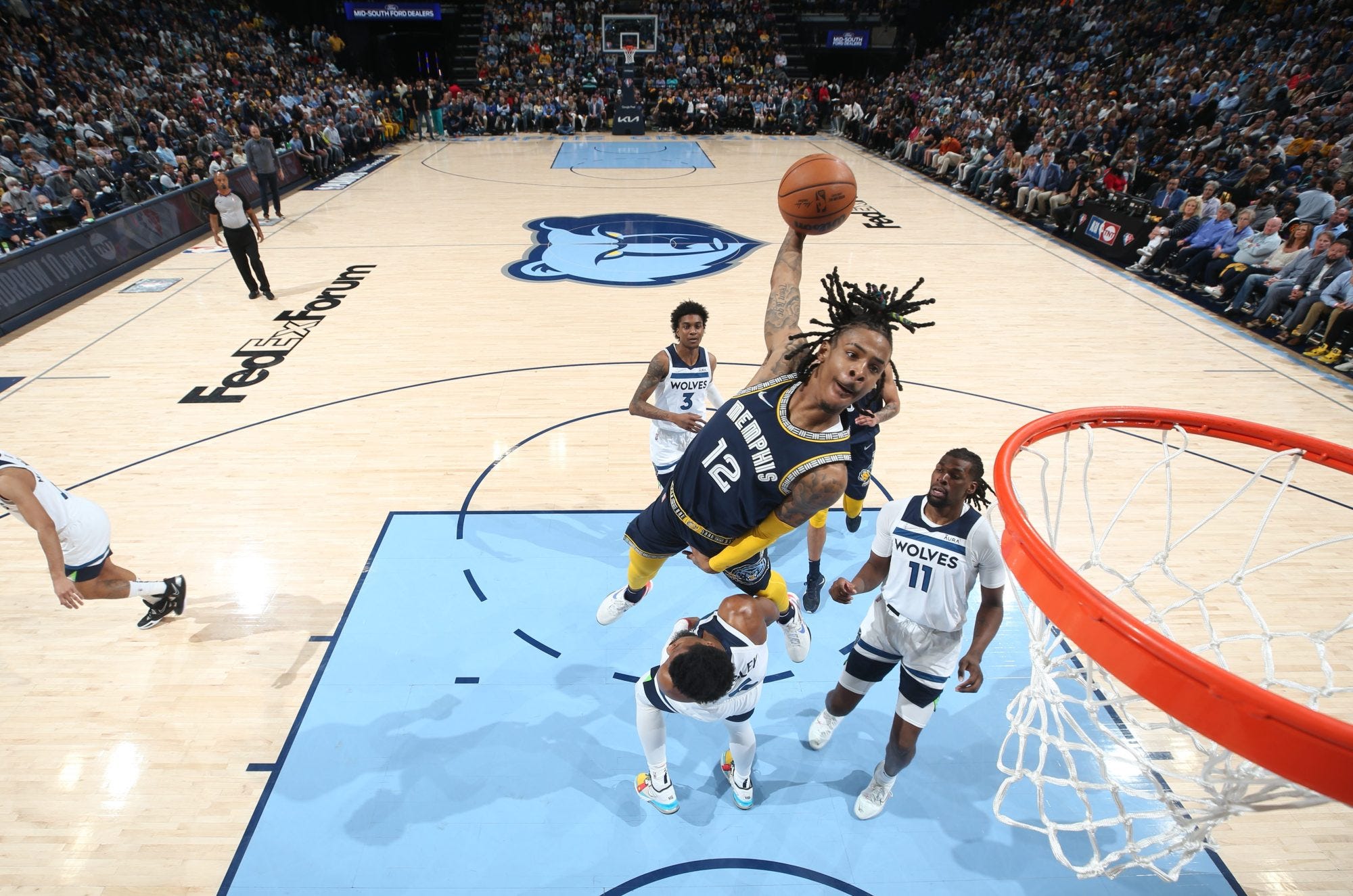
The first-round series against the Timberwolves was pure chaos. A street fight in jerseys. Minnesota was long and athletic and reckless. The games swung wildly: 20-point leads evaporating like spilled beer on Beale street. Memphis, for all its youth, bent but never broke. They clawed back from double-digit deficits twice, absorbing punches with defense and fast-break fury.
Ja’s takeover in the fifth game—30 points and a game winning driving layup that felt patented—announced to the world that these Grizzlies were a problem.
If the T-wolves series was an announcement, the second round matchup against the defending champion Warriors was a referendum. This was youth versus dynasty. Memphis wanted all the smoke.
Ja exploded for almost 50 in Game 2, matching the kind of playoff brilliance usually reserved for legends. The Grindhouse shook with equal parts of disbelief and defiance. Memphis led the series 2–1. It looked, for a flicker, like the future had arrived ahead of schedule.
Then the series turned. Ja injured his knee and everything felt more fragile. Without their engine, the Grizzlies leaned on defense. They delivered a stunning 39-point demolition in Game 5, but Golden State, patient and ruthless, eventually closed them out in six. The dynasty moved on.
But the sense of arrival lingered. The Grizzlies proved they could trade blows with champs. They proved the bravado wasn’t hollow. For a few electric weeks that spring, Memphis felt like the future of the NBA.
The fall
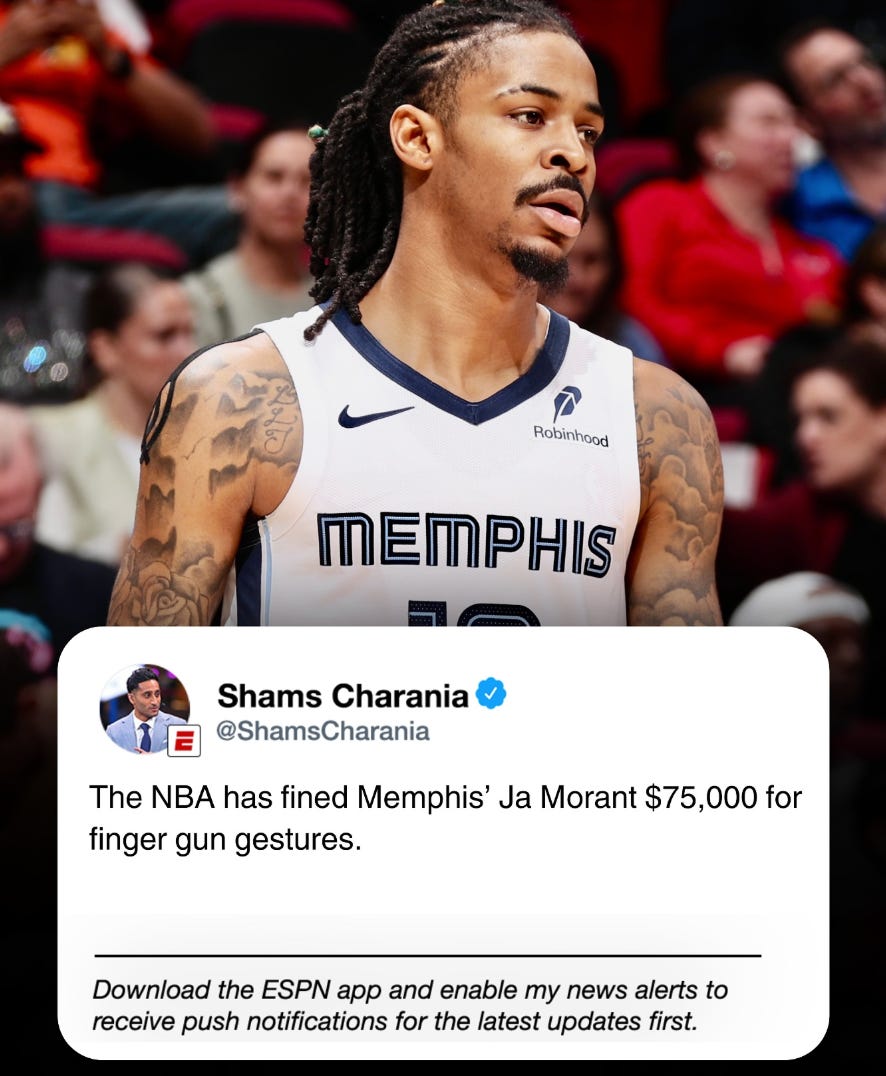
It started with a video.
Then another.
Ja, live on Instagram, holding a gun. Once in a Denver nightclub. Again in a car, smiling at the camera. The league suspended him. The city held its breath.
Memphis knows something about guns and consequences. Violence isn’t abstract here. Morant’s antics felt less like rebellion and more like self-sabotage.
There’s something uniquely Memphis about watching someone so gifted flirt with ruin.
The conversations grew heavy. Was he misunderstood? Reckless? A product of fame too fast?
Who the hell knows? How would you act if all the sudden you were worth $300M in your early 20s?
In Memphis, the reaction was layered. There was disappointment, yes. But also empathy. Memphis understands what happens when young Black men are judged without context. And what it feels like to live in a city exhausted by the violence only generational hopelessness can bring.
Morant returned quieter. The dunks still made jaws drop, but the edges were sharper. The narrative had shifted. The TV trucks were gone.
Memphis, once again, saw itself reflected: talented, flawed, determined to recover.
War crimes
No sports story exists in isolation from money and politics.

When Robert Pera bought the Grizzlies in 2012, he was hailed as the future: a 30-something tech founder bringing Silicon Valley capital to a small river town.
Pera made his fortune through Ubiquiti, a company that sells high-end Wifi equipment globally.
Pera has largely stayed out of the spotlight. But recent reporting by Pablo Torre and Hunterbook Media have placed Pera, his company, and Memphis under a microscope. If the reports are true, Pera and Ubiquiti have profited (and continue to profit) off of Russian war crimes.
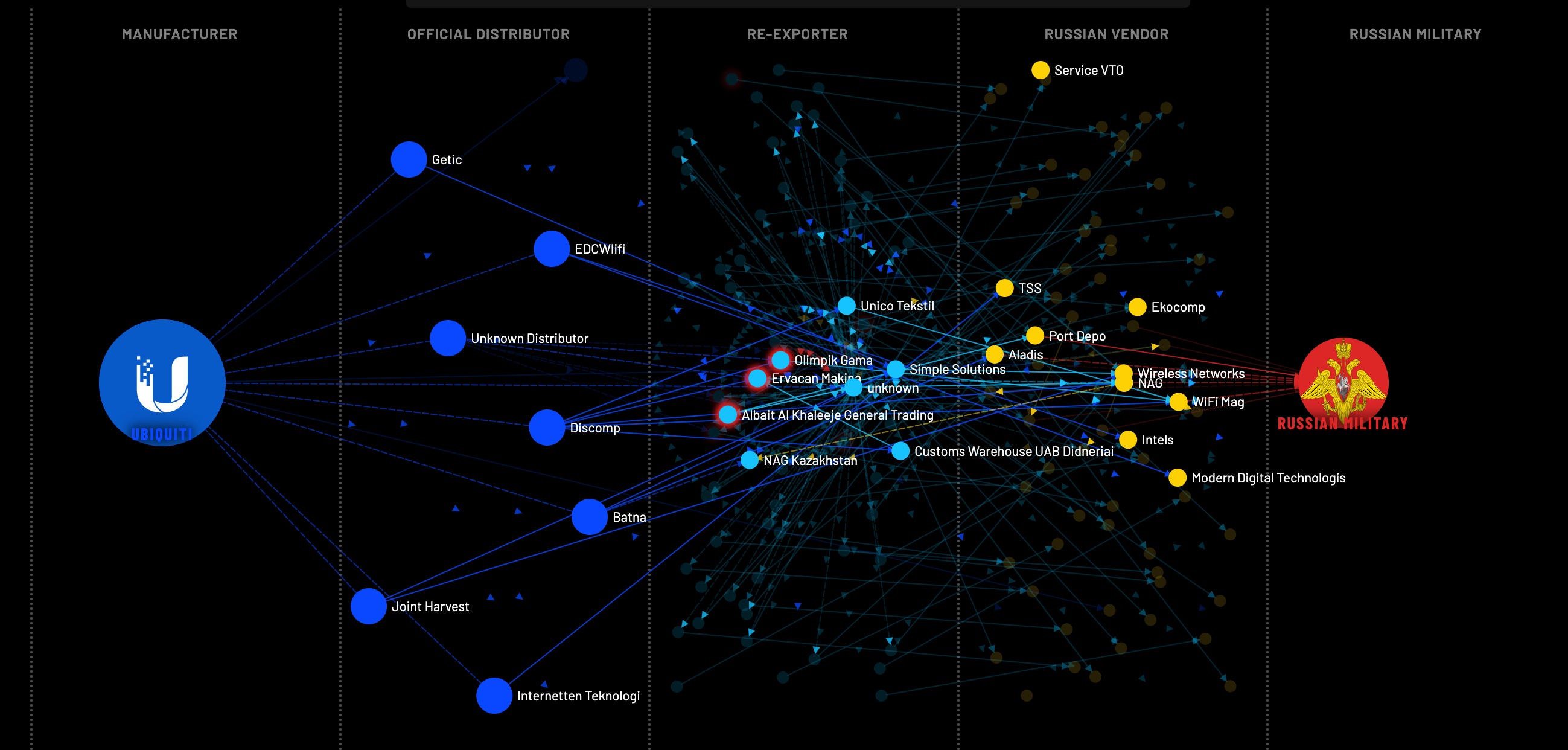
This is uncomfortable terrain for Memphis.
Memphis knows how it feels to be used by outside capital. It has watched an endless stream of corporations arrive with tax breaks and promises, only to depart when incentives dry up. The idea that Memphis’s civic heartbeat might be connected to war crimes in Ukraine is truly surreal.

Sports function as a kind of moral theater. The players wear the uniforms. The owners write the checks. The city invests its soul.
What does it mean for a small struggling city’s primary cultural export to be owned by a man who profits off of dead Ukrainians?
The quiet part
I’ve been working on this essay for months now. And throughout that time, I kept hearing the same thing:
Enjoy it while you can.
There’s a growing belief in Memphis—and in the NBA—that the Grizzlies won’t be here ten years from now.
“The math just doesn’t work,” a current NBA GM told me.
“Five to eight [years], I’d say . . . Probably at the conclusion of the current arena deal,” one former Grizzlies front office employee told me. “Just follow the money.”
So that’s what I did. And the money runs east on I-40.
Same state, different continent
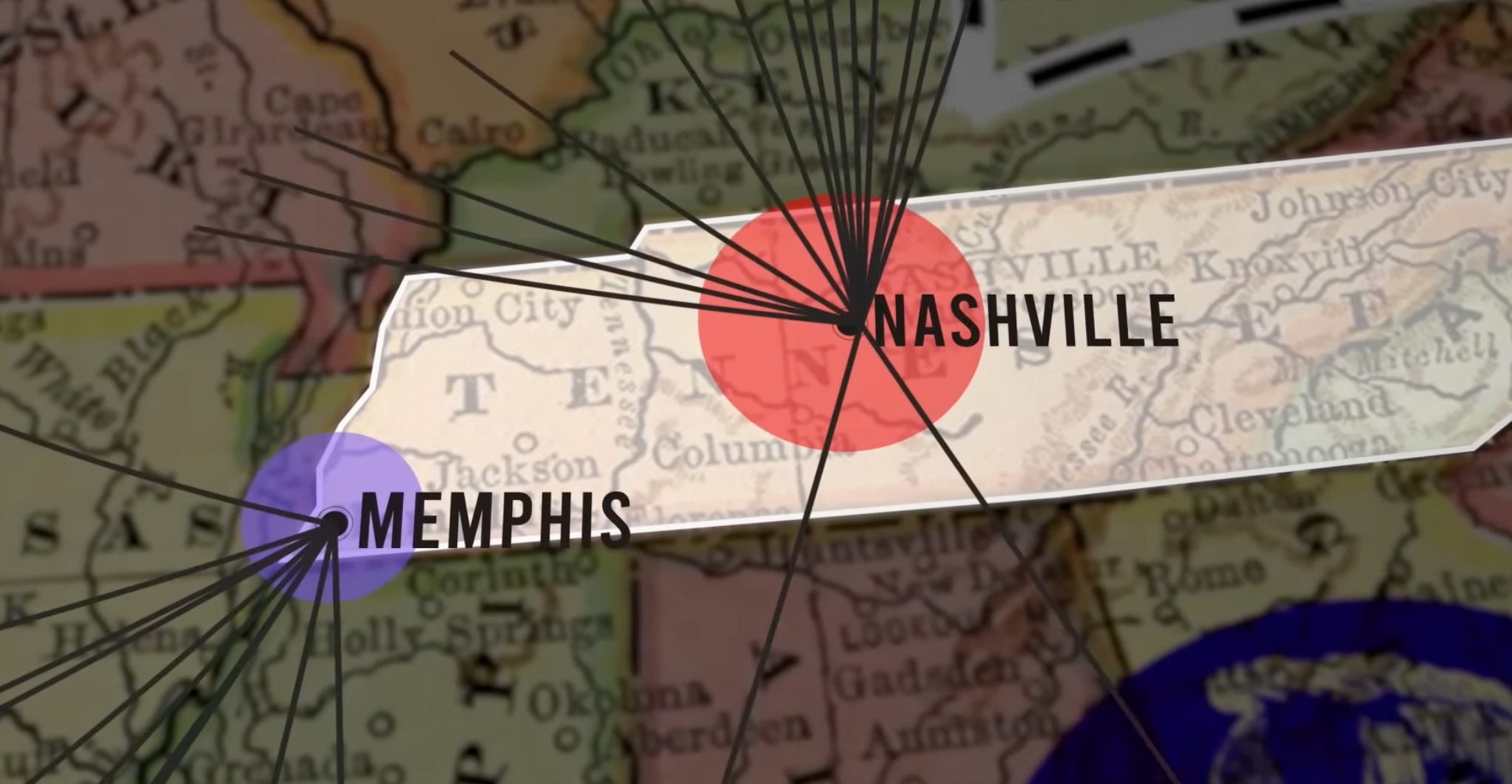
Memphis and Nashville are separated by about three hours of interstate.
But they might as well be different continents.
The animosity is complicated, layered, almost Shakespearean. Not hatred so much as rivalry laced with history and insecurity. Both cities have rich music histories. Both cities claim Johnny Cash. But only one of them has been crowned “Music City.”
There’s a persuasive case that Memphis was the first music city in Tennessee.
Johnny Cash grew up in the Arkansas Delta, a short drive from Memphis, the region’s economic and cultural capitol. He played his first live performance at a church in Cooper Young. Sun and Stax ushered in a new era of American music. The blues that electrified the rock-and-roll of the ’60s—Led Zeppelin, the Stones—came from Memphis.
Memphis was once the epicenter of American culture. It birthed rock and roll. And country. And R&B.
And yet the money went east.
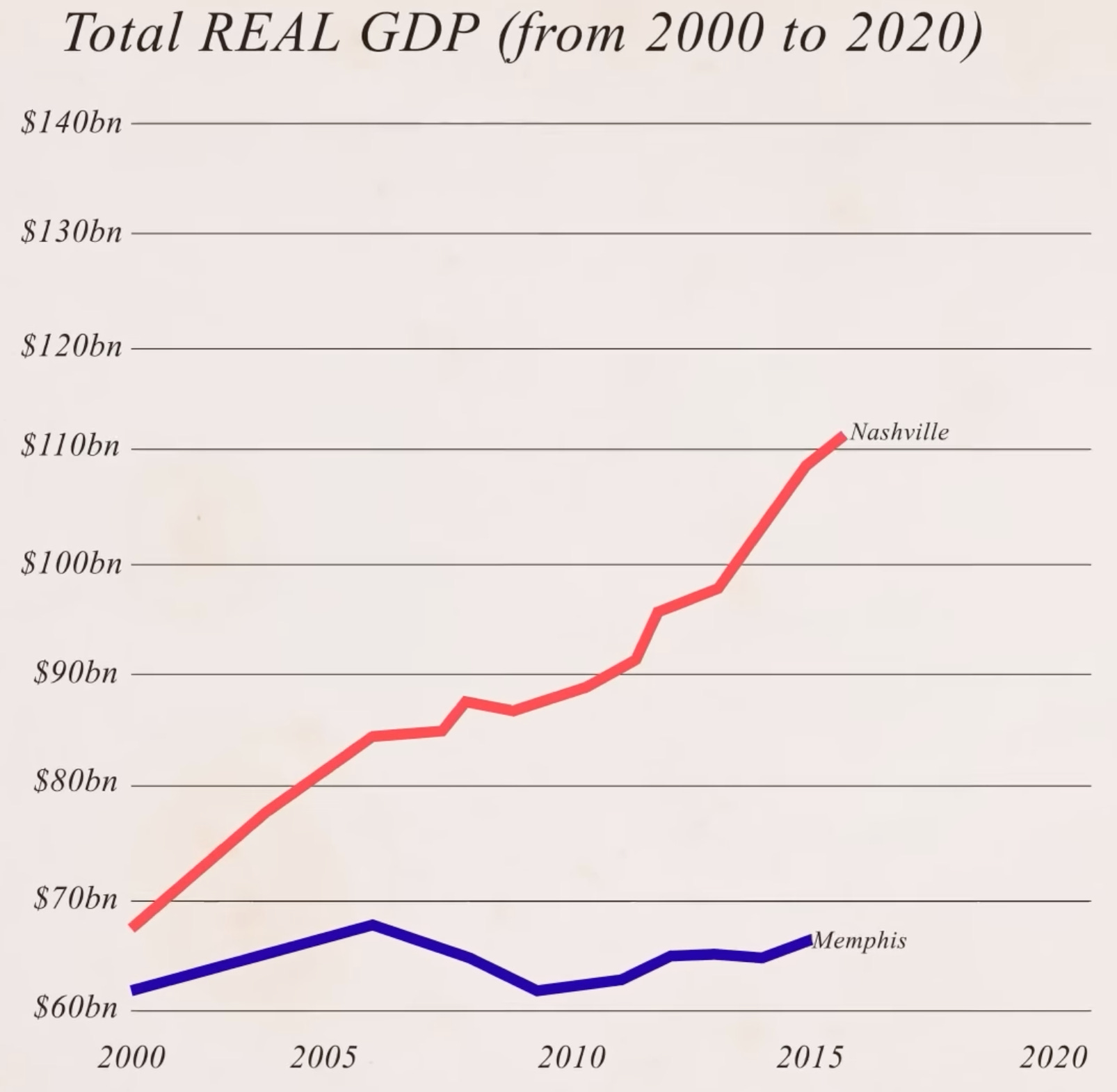
Cash retired to Nashville. Country music became a commodity. The tourism boards did their work. Nashville boomed.
Memphis, meanwhile, continued to nosedive.
For decades, Memphis had a larger population than Nashville. Then, in the early 2010s, the lines finally crossed. Nashville surged—corporate relocations, tech outposts, cranes clawing at the skyline. Memphis, meanwhile, entered an economic death spiral: three decades of continuous population decline; neighborhoods hollowed; tax bases thinned; confidence wavered.
In civic terms, Nashville’s the future. Memphis is a memory.
If the Grizzlies were to leave Memphis for Nashville, it would be existential. It would confirm every fear this city has whispered to itself in the dark: the future belongs down I-40.
The arena question
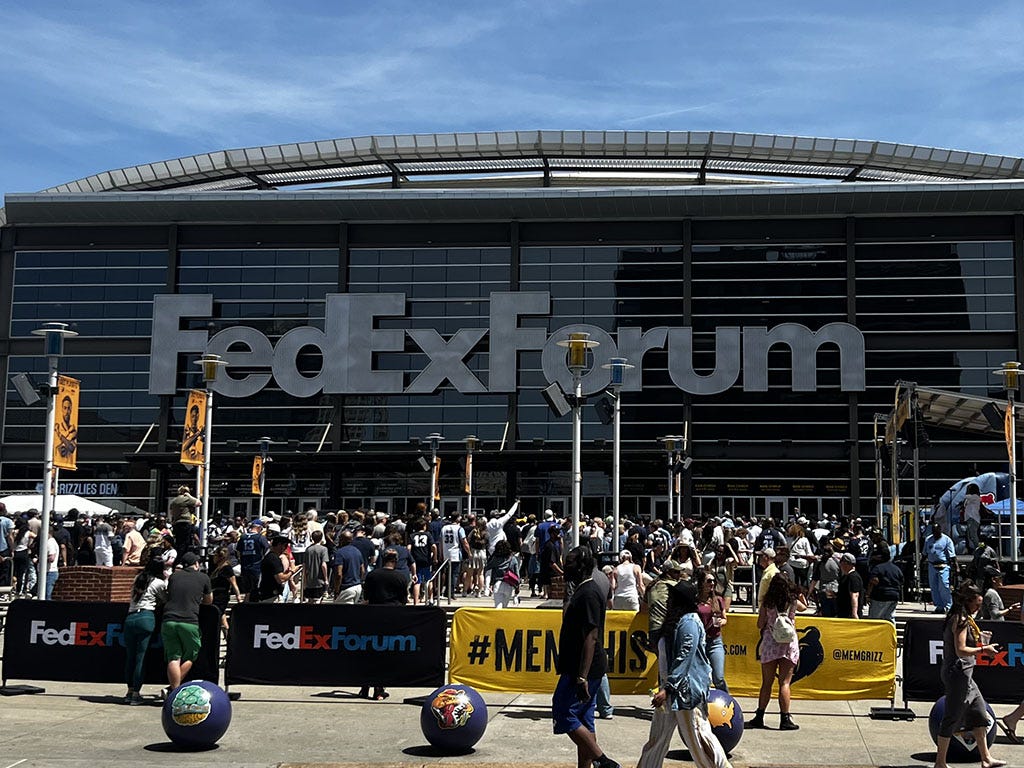
Let’s start with the Grindhouse.
FedExForum opened in 2004. In arena years, that makes it middle-aged. Not ancient. Not new. The bones are fine. The sightlines are good. But in a league increasingly obsessed with premium in-arena experiences—club seating, immersive tech, luxury suites that resemble boutique hotels—fine is not enough. Especially when you’re one of the smallest markets in the league.
The Clippers’ state-of-the-art arena in Inglewood reset the standard. The NBA, like every modern entertainment industry, chases optimization: more revenue per seat, more screens per fan, more reasons to stay inside the gambler-friendly ecosystem.
Nashville’s arena is also aging. But here’s the crucial difference: Nashville is booming. They’re gonna need a new arena, eventually.
And when a booming metro decides it wants a new arena, the conversation begins with how, not whether.
If a serious proposal emerged to build a brand-new, cutting-edge arena in Nashville—backed by local and state incentives, wrapped in the language of economic development—the league wouldn’t just listen. It would roll out the red carpet.
But wouldn’t that absolutely devastate the Grizzlies’ most loyal fans? Yep—and what of it?
The NBA isn’t sentimental. It’s a television product with gambling ads.
TV sets, not tickets
But would Nashville even support an NBA team? They already have the NFL, NHL, and MLS.
That’s sort of besides the point.
The NBA’s revenue engine is television. Regional sports networks. National deals. Streaming platforms. Simply put: the more TV sets in a metropolitan area, the more leverage in negotiations. The more leverage, the larger the pie. And that pie is shared across the entire league.
Nashville has significantly more households than Memphis. About a million more, in fact. So even if the arena isn’t full every night, the broadcast footprint would expand two-fold. Advertisers care about eyeballs, not regional emotional attachment.
Moving the team three hours east would also allow the franchise to retain much of the Mid-South fan base. Jackson, Tupelo, Murray, Birmingham, Louisville, Little Rock, and even parts of Memphis proper would still drive over for big games. The brand could shift from “Memphis” to “Tennessee” while quietly doubling the number of TV sets it has for negotiating leverage.
It would infuriate die-hard Memphians. It would fracture something fragile in Memphis’s psyche. But it’s a no-brainer financial decision.
Make no mistake: losing them would feel like losing a family member.
If civic pride is an invisible currency, the Grizzlies have been Memphis’s most consistent source of deposits.
Grit and Grind gave the city language. Ja’s meteoric ascent gave it swagger. Even the controversies, painful as they were, kept Memphis in the national conversation.
Without the team, the national lens narrows again to Elvis and barbecue lists and crime statistics.
There’s something uniquely cruel in the idea that Memphis might lose its only big-league stage to a place known for cotton-candy country music and bachelorette pedal taverns.
Just the latest chapter in Memphis seeing something it birthed flourish elsewhere.
The river keeps moving
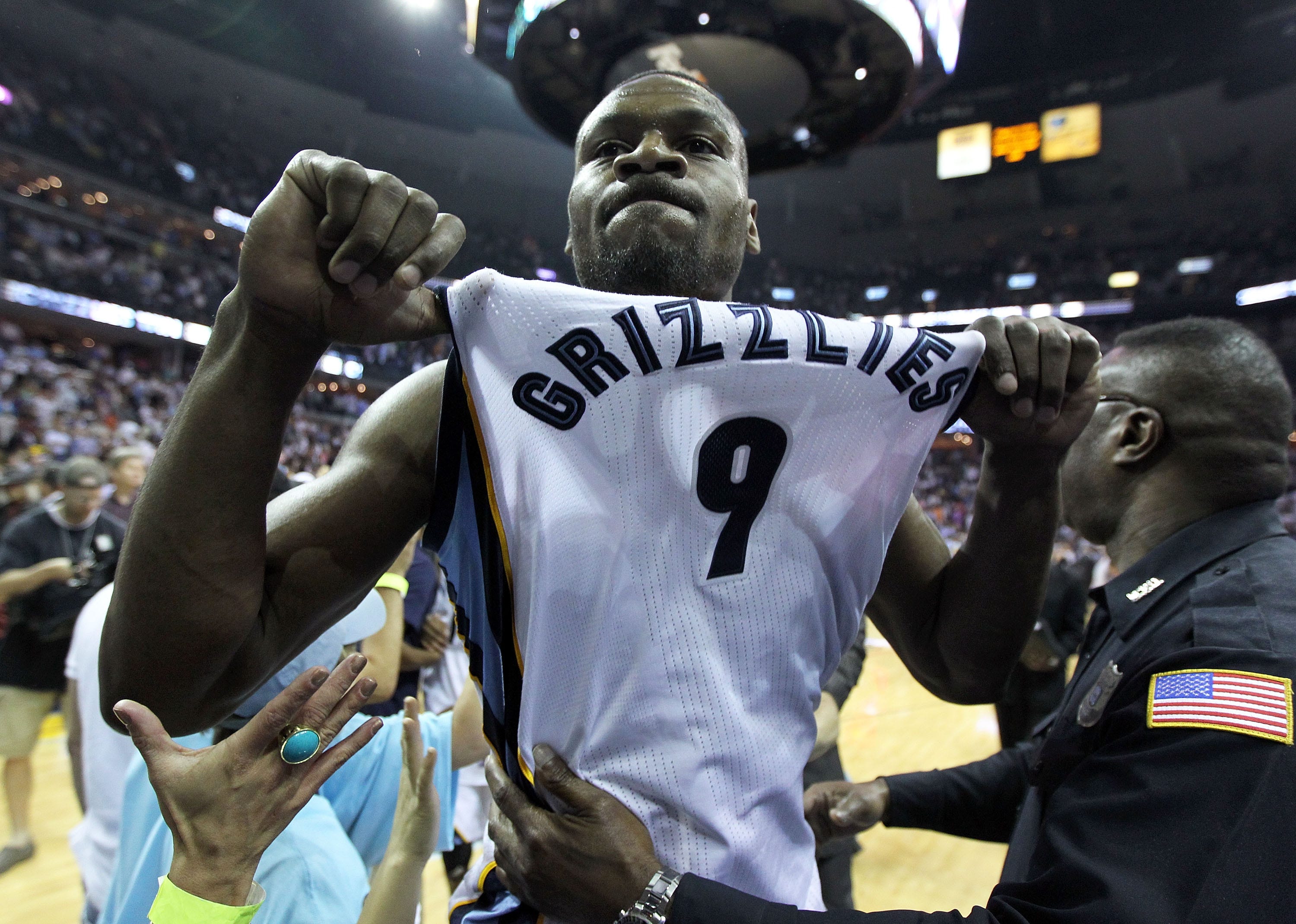
The Grizzlies may win a title one day. But the parade probably won’t be on Beale.
And if they do, it definitely won’t be with Jaren, or Bane, or Steven Adams.
Ja’s all that’s left from the next-gen core. (And that’s because the Grizz couldn’t find a team that would trade for him.) After a few seasons in free fall, the Grizz are officially in rebuild mode.
Ownership may evolve based on the recent reporting about Pera. If Donald Sterling was (rightly) forced to sell his team for spewing racist vile, what should the NBA do with an owner that’s filling his coffers with war-crime soaked blood money?
Who the hell knows.
The only thing certain to remain is the river.
The Mississippi meanders past downtown without commentary. It’s seen blood-soaked cotton and corpses, steamboats and steel bridges. It’s witnessed the rise and fall of empires that believed themselves permanent.
The Grizzlies are an infant by comparison—just a few decades in a city that measures time in centuries. But in those decades, they’ve embedded themselves into Memphis’s DNA.
They’ve given the city something to gather around that’s not tragic.
They’ve offered a national stage on which Memphis can project its authentic toughness and tenderness; swagger and scars.
After a win, the Forum spits Memphis back out onto Beale. Someone plays Al Green on a jukebox. A kid dribbles an invisible ball on the sidewalk. The river wind carries echoes of laughter down the block.
The Grizz don’t solve Memphis’s myriad problems. They don’t erase its violent history.
But they give the city a heartbeat.
And in Memphis, where memory runs deep and hope has always been a radical act, that’s no small thing.
I just hope we enjoy it while we can.
CPJ | 16 Feb. ‘26 | Memphis
And yet the capital keeps flowing from the Capitol to check the boxes for the lease renewal and Silver just said relocation isnt happening, but fear gets clicks so congrats on your engagement.
Also ironic that you include Pera's war crimes while you host your site on Nazi platforming substack